
Blog
Local SEO: What's Next After the Basics?
10/16/2026
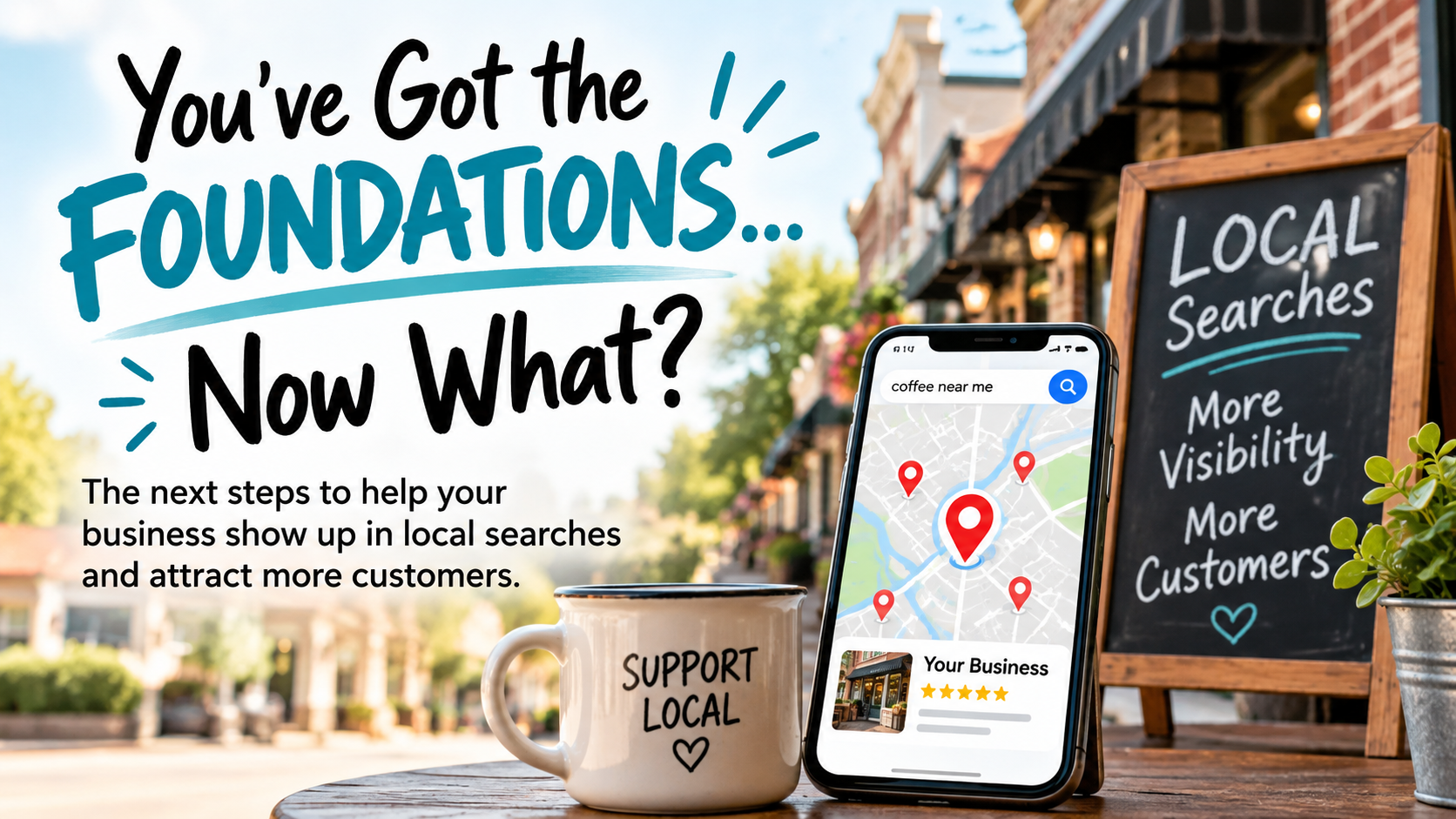
Your Website Is Ready. Now Let's Help the Neighbors Find You.
You've laid the SEO groundwork. Here's how to take the next step and get your business noticed by the people right down the road.
So, you've got a website. You've added keywords, written descriptions, made sure everything loads properly, and maybe even learned what SEO stands for.
First off, nice work!
But here's the thing: Having a website that search engines understand doesn't automatically mean the people in your own backyard can find you.
Think of it like opening a beautiful new storefront but forgetting to put up a sign on the road.
And don't worry. You don't need to become a computer expert or learn a new language to make it work.
What Exactly Is Local SEO?
Let's say someone's kitchen sink starts leaking. They're probably not searching for "the fascinating history of residential plumbing."
They're typing something like:
"Plumber near me"
"Emergency plumbing in Rogersville"
"Best plumber in Greeneville TN"
Google tries to connect that person with businesses that serve their area.
Local SEO is about helping Google recognize that your business is one of those businesses.
Whether you're a plumber, photographer, landscaper, salon owner, or local shop, the idea is the same: show up when nearby customers need what you offer.
1. Give Your Google Business Profile Some Love
You know those business listings that show up on Google Maps with photos, reviews, phone numbers, and directions?
That's your Google Business Profile at work.
And if you haven't claimed yours yet, this is a great place to start.
Make sure your profile includes your correct business name, phone number, website, hours, services, and service area. Choose the categories that actually describe what you do.
Then add some real photos.
Not everything needs to look like it came from a fancy marketing agency. A photo of your team, your storefront, or a recently completed job can help customers see the real people behind your business.
Quick tip: Keep your hours updated, especially around holidays. Nobody enjoys driving across town to find a locked door.
2. Talk About the Places You Actually Serve
If you serve Rogersville, Greeneville, Morristown, or surrounding East Tennessee communities, make sure your website says so.
Sounds obvious, right?
You'd be surprised how many businesses forget this part.
Mention your service areas naturally on your website, especially on relevant service pages and your contact page.
For example, instead of simply saying:
"We provide professional plumbing services."
Try:
"We help homeowners and businesses in Rogersville, Greeneville, and surrounding East Tennessee communities with dependable plumbing services."
See the difference?
You're still talking to real people, but you're also giving search engines useful information about where you work.
Just don't stuff the same town name into every sentence. Nobody wants to read something that sounds like a GPS having a nervous breakdown.
3. Let Your Happy Customers Do Some Talking
When you're looking for a business you've never used before, what's one of the first things you check?
Reviews.
Your potential customers are doing the same thing.
Google reviews help people feel more confident about choosing your business, and they can contribute to your local search visibility.
Start making it a habit to ask satisfied customers for an honest review. You can send a direct link by text or email to make it easy.
And when someone leaves a review, respond!
A simple "Thank you! We appreciate your business" goes a long way.
If someone leaves a negative review, respond professionally and try to make things right.
Remember: You're not just responding to one customer. You're showing future customers how you treat people.
And please, don't buy fake reviews. Your reputation is worth more than a handful of questionable five-star ratings.
4. Make Sure Your Business Information Matches Everywhere
Imagine finding a business on Google, clicking over to Facebook, and discovering a completely different phone number.
Not exactly confidence-inspiring.
Your business name, address (if publicly listed), phone number, and website should be accurate and consistent wherever customers find you.
Check places like Google, Facebook, Yelp, local directories, and industry-specific listings.
You don't need to be listed on every website under the sun. Focus on the places that matter to your business and your customers.
Think of it as keeping your digital business cards up to date.
5. Where Should Your Business Be Listed? (Hint: Google Isn't the Only Game in Town)
Remember when finding a local business meant flipping through the Yellow Pages?
Now people are asking their phones, their cars, and even AI assistants things like:
"Hey Siri, find a plumber near me."
"Alexa, where's the closest coffee shop?"
"Google, who's the best-rated electrician in Greeneville?"
"ChatGPT, recommend a reliable landscaper in my area."
Different tools, same goal: Find a trustworthy local business without spending all afternoon looking.
And here's something many business owners don't realize: Not every search tool gets its information from the same place.
That's why having accurate business profiles across several important platforms can make a difference.
The Big Three: Start Here
1. Google Business Profile — Your First Priority
If you only have time to work on one listing, start here.
Your free Google Business Profile helps your business appear in Google Search and Google Maps.
Make sure you've claimed your listing, added your services, uploaded photos, and kept your contact information current.
Get started: Google Business Profile
2. Apple Business — Don't Forget the iPhone Crowd
Ever asked Siri to find a nearby business?
Apple Maps is an important part of how iPhone users discover local businesses.
Apple's free business tools let you manage your business information, photos, hours, and other details that can appear across Apple Maps and Siri.
Get started: Apple Business
3. Bing Places for Business — Yes, Bing Still Matters!
We know. When someone says "search engine," Bing probably isn't the first thing that pops into your head.
But Bing is still an important search platform, especially as AI-powered searching becomes more common.
Microsoft's free Bing Places for Business lets you manage your information in Bing Search and Bing Maps.
And here's a bonus: You may be able to import information from your Google Business Profile instead of starting from scratch.
Get started: Bing Places for Business
A Few More Places Worth Your Attention
Once you've handled the big three, consider these additional platforms:
Facebook Business Page
For many local communities, Facebook is still the digital equivalent of asking your neighbor for a recommendation.
Keep your business page updated with your services, contact information, website, photos, and recent work.
Yelp
Yelp can be particularly useful for restaurants, home services, beauty businesses, and other businesses customers commonly research through reviews.
Claim your listing, check your information, and respond professionally to customer feedback.
Nextdoor
If your business serves homeowners or neighborhood customers, Nextdoor is worth considering.
It's built around local communities, making it a natural place for businesses like plumbers, landscapers, cleaners, and contractors.
Industry-Specific Directories
Depending on your business, there may be other directories worth joining.
For example, contractors might benefit from relevant home-service platforms, while restaurants should make sure their information is accurate on popular dining and review sites.
The key is choosing platforms your customers actually use—not signing up for 47 websites just because someone on the internet told you to.
What About AI Searches?
Here's where things get interesting.
AI-powered search tools like ChatGPT, Google Gemini, and Microsoft Copilot are changing how people look for businesses.
Instead of searching through a long list of websites, customers can ask a question and receive a conversational recommendation.
These tools can draw information from websites, search results, business listings, and other available sources. Exactly which sources they use depends on the platform.
There's no magic "Add My Business to AI" button that guarantees you'll be recommended.
But you can make your business easier to discover and understand.
Start by making sure:
Your website clearly explains what you do and where you work.
Your business information is accurate across major search and mapping platforms.
Your website answers questions customers commonly ask.
You have genuine customer reviews and a trustworthy online presence.
Your website is accessible to search engines.
Think of it this way: The clearer and more consistent your online presence is, the easier it is for customers—and the technology helping them—to understand your business.
Don't Forget Voice Search
Voice searches often sound more like conversations than traditional searches.
Someone might type "plumber Rogersville TN" into Google.
But when talking to their phone, they're more likely to ask:
"Who's a good plumber near me that's open today?"
That's why accurate business hours, service areas, reviews, and clear descriptions matter.
It also helps to write website content that answers natural questions.
For example:
"Do you offer emergency plumbing services in Rogersville?"
A straightforward answer on your website can be helpful to both potential customers and search tools.
So, Do You Need All These Profiles?
Nope.
Start with Google, Apple, and Bing. They're free, and they're a sensible foundation for local search visibility.
Then add Facebook, Yelp, Nextdoor, or industry-specific platforms where they make sense for your business.
Most importantly, keep your information accurate and updated.
You don't need to be everywhere on the internet. You just need to show up where your customers are looking.
And if keeping track of all those profiles sounds like one more thing you don't have time for, that's exactly the kind of digital housekeeping Pixel Mediary can help with.
6. Give Your Website a Little Local Personality
Here's where you can have some fun.
Your website shouldn't sound like it was written for every business in every town in America.
Show people that you're part of their community.
Share a recent project, highlight a service you provide locally, answer questions customers regularly ask, or write about seasonal needs in your area.
For example:
A landscaper could share tips for preparing East Tennessee lawns for winter.
A plumber could explain how to prevent frozen pipes during a cold snap.
A photographer could share ideas for beautiful local photo sessions.
This kind of content helps answer real customer questions while giving search engines more context about your business and the communities you serve.
Just make sure you're sharing something useful, not writing about your town simply to squeeze in another keyword.
7. Make It Ridiculously Easy to Contact You
You've done the work to help people find your website.
Now don't make them play hide-and-seek to contact you.
Your phone number should be easy to find. Your contact form should actually work. Your website should look good and function properly on a phone.
And if you serve multiple communities, make it clear where you're available.
People searching for local businesses are often ready to make a decision. Sometimes the difference between getting the call and losing the customer is simply how easy you make that next step.
8. Keep Showing Up (Even When You're Busy)
Here's the part nobody loves hearing.
Local SEO isn't a one-and-done project.
But that doesn't mean you need to spend hours every day working on it.
A little consistency goes a long way.
Add photos when you finish a project. Ask for reviews. Update your hours when they change. Share something helpful once in a while. Check that your business information is still accurate.
You can also keep an eye on your Google Business Profile performance and website traffic to see whether more people are finding you through local searches.
Think of local SEO like maintaining your storefront. You don't rebuild the whole building every month. You just keep things clean, current, and welcoming.
So, What's the Next Step?
If you've already handled the SEO basics, don't feel like you need to start over.
Start with three simple things this week:
Check your Google Business Profile. Make sure everything is accurate and complete.
Look at your website through a local customer's eyes. Can someone immediately tell what you do, where you work, and how to contact you?
Ask a happy customer for an honest review. Then make it part of your regular routine.
That's it. Three manageable steps that can help build your local presence.
Need a Hand? That's Kind of Our Thing.
At Pixel Mediary, we know small business owners have enough on their plates without adding "figure out Google's latest mystery" to the to-do list.
We help businesses build and maintain websites, improve their online presence, and connect with the customers they're trying to reach.
You focus on running your business. We'll help make sure people can find it.
Ready to help your business get noticed locally?
Visit pixelmediary.com and let's talk about what comes next.